Hot Ice â€å½ã¢â‚¬â€œ It Won t Happen Again
Here'due south a fun science experiment that will definitely become a "wow" from the kids. Combine baking soda and vinegar to make sodium acetate, or hot ice! It crystalizes instantly when you lot cascade it, allowing you lot to create a tower of crystals. Since the process of crystallization is exothermic, the "water ice" that forms will be hot to the touch. Science is so cool!

Making hot ice is a elementary process, and you probably have everything yous need on hand. Yous'll need a couple of hours, though, so keep that in heed.
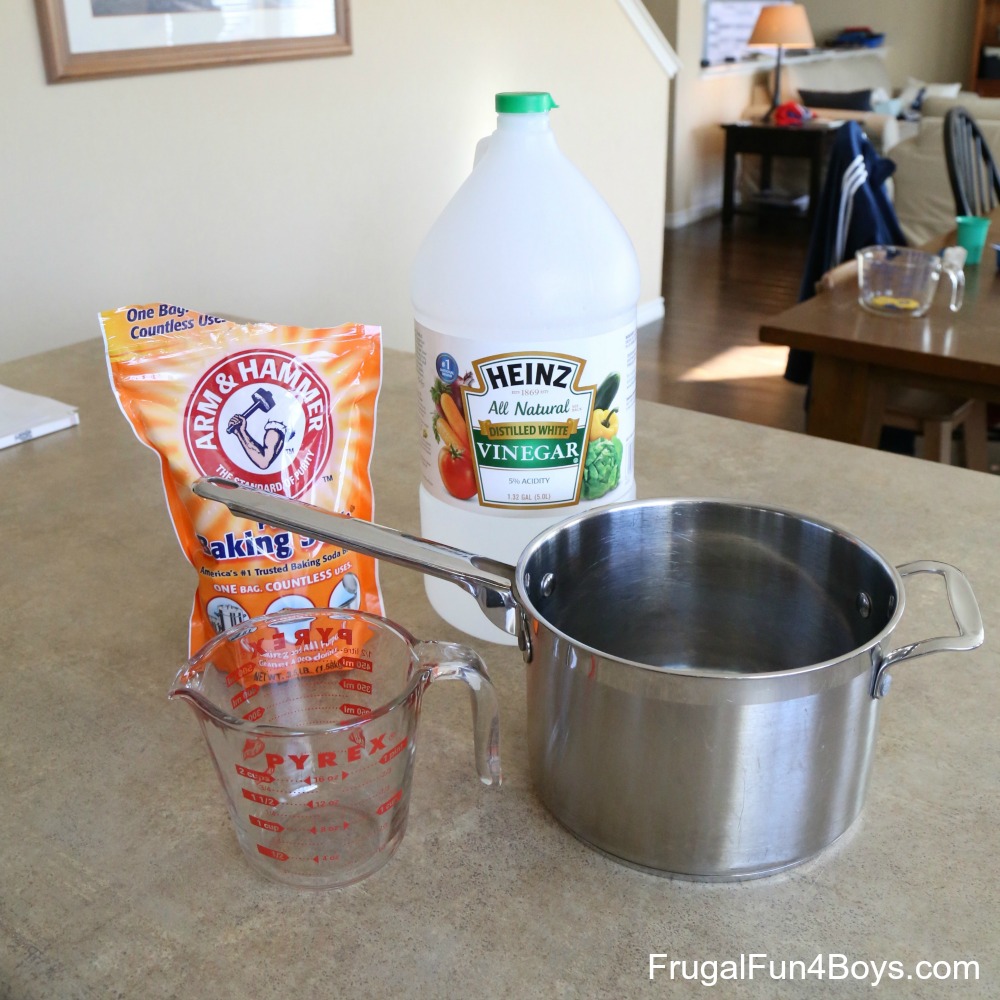
Footstep i: Combine four cups of vinegar and iv tablespoons of blistering soda in a pot. Before we did this experiment, I read instructions for hot water ice on a few dissimilar websites. I decided to use the amounts given on Playdough to Plato. Add the baking soda a piddling at a time and so that when information technology fizzes it won't overflow over the edges of your pot!
Janie and Jonathan were quite impressed with this step.
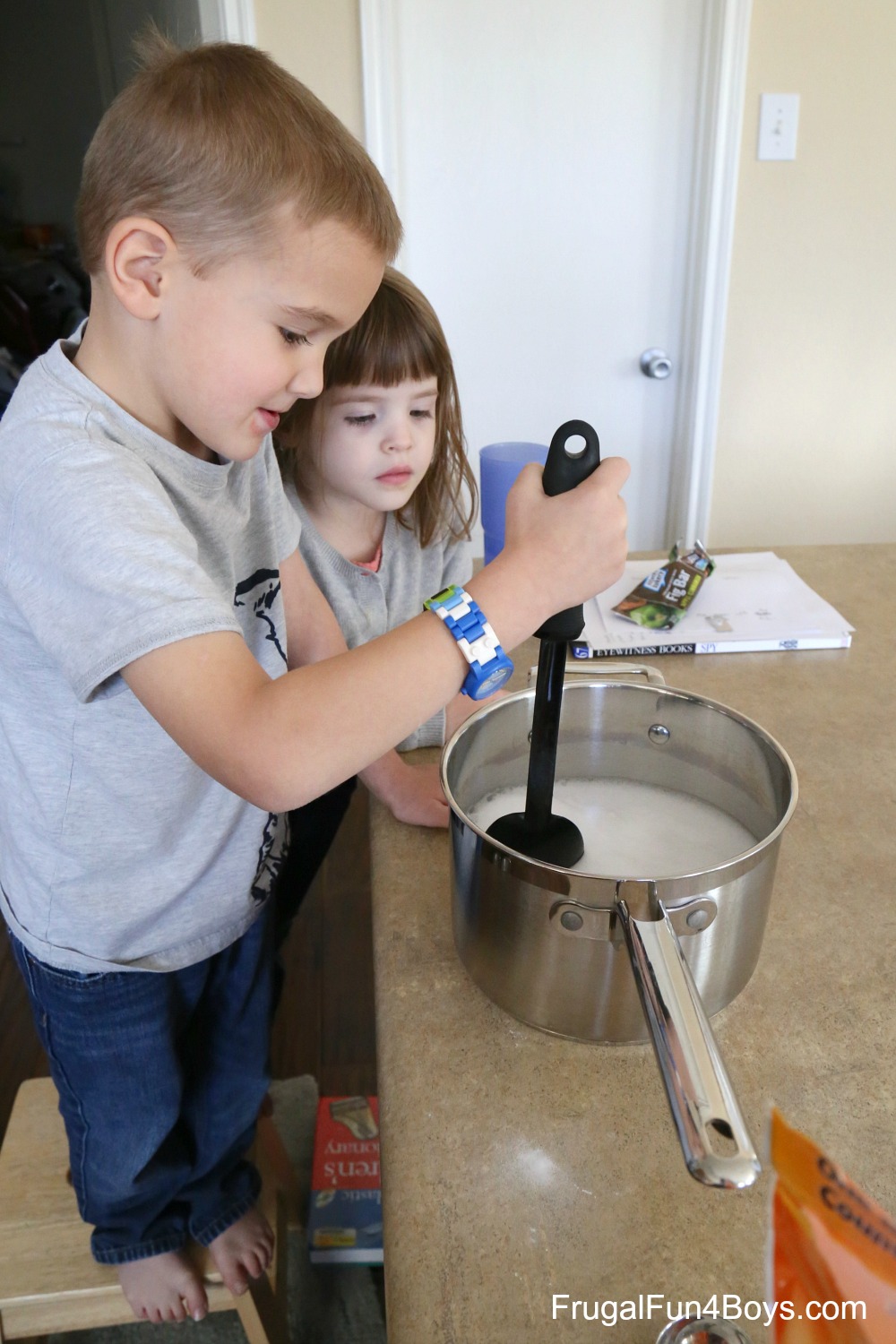
Step 2: Yous take now made sodium acetate! (Too as carbon dioxide – it was given off in the reaction, which created all that fizzing.) You'll need to boil the solution, though, to reduce the amount of water so that it is concentrated enough to class crystals.
Melt your solution over low to medium heat for about an hour. Y'all want to reduce it down to ane cup or less.
At present, the stuff I read online said that crystals would start to course effectually the border of the pan. This is important considering you'll need a few crystals equally "seeds" to start the crystallization process. Well, our solution never formed crystals while it was cooking. When it was downwards to iii/four loving cup, I finally stopped boiling information technology.
Stride 3: Pour your sodium acetate into a drinking glass container and put it in the refrigerator for thirty to 45 minutes.
We did this, and while information technology was in the fridge, I scraped some of the dried solution off the sides of the pot, hoping that it would piece of work as the crystals needed to commencement the reaction.
It didn't work. Boo. We poured the solution over the pan scrapings, and null happened.
We tried putting it in the refrigerator for awhile longer. Still nil.
But, this experiment is very forgiving! I left the solution on the counter and came back to it the next day. I decided to boil information technology a little more – possibly it wasn't concentrated enough. And nosotros had never seen any crystals course in the pan. After about 10 more than minutes of humid, in that location even so weren't any crystals on the edges of the pan, but I decided that the solution was reduced down and so far that nosotros just had to stop.
Every bit presently as I poured the solution out of the pan and into a glass jar, the remaining liquid in the bottom of the pan crystallized instantly! Then I knew we were getting somewhere!
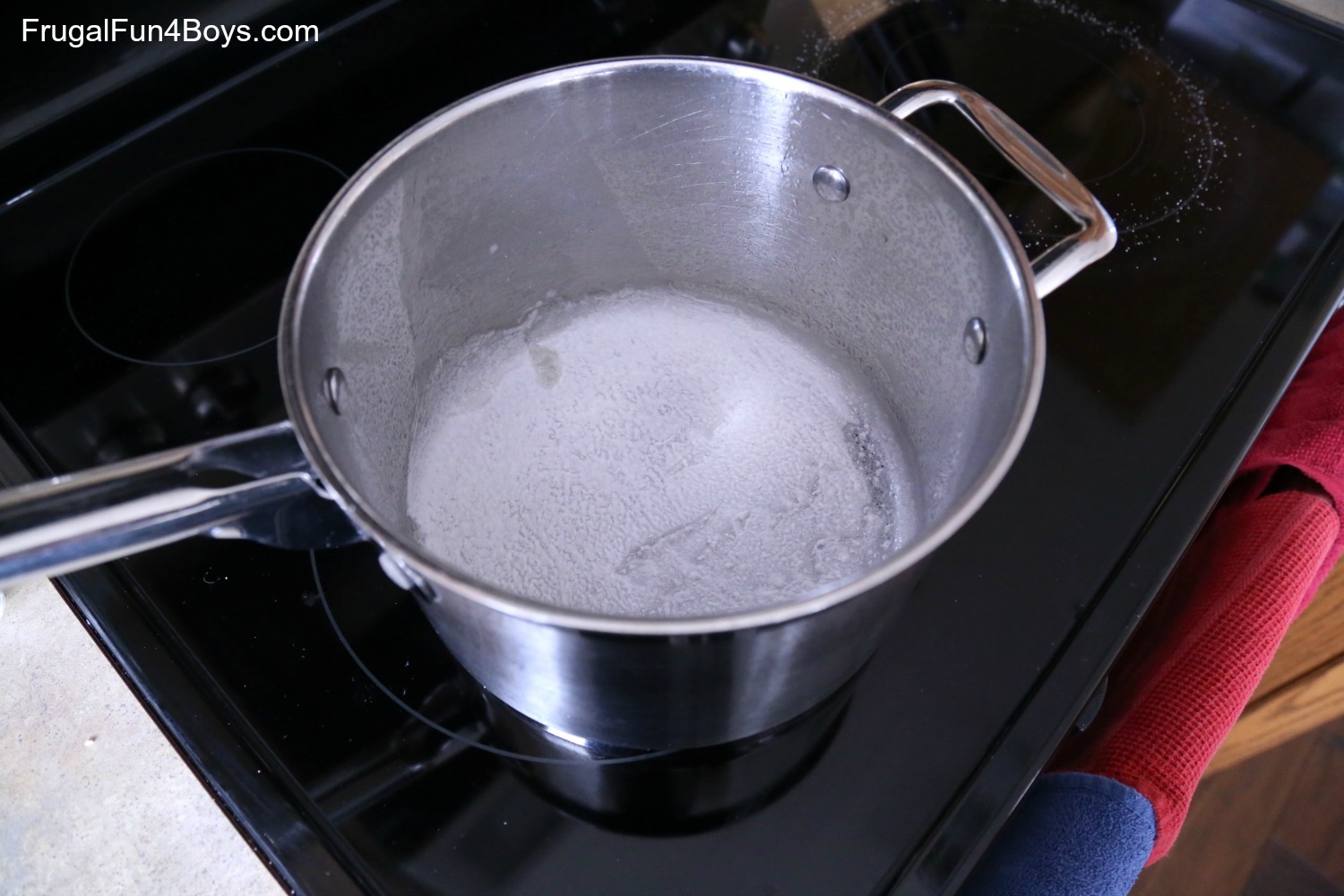
This time, I put the solution in the freezer for virtually 20 minutes. Much faster.
Step 4: Cascade the cooled solution onto a few crystals that you scraped from the pan.
I scraped off some crystals from the bottom of the pan and put them in a plastic tray.
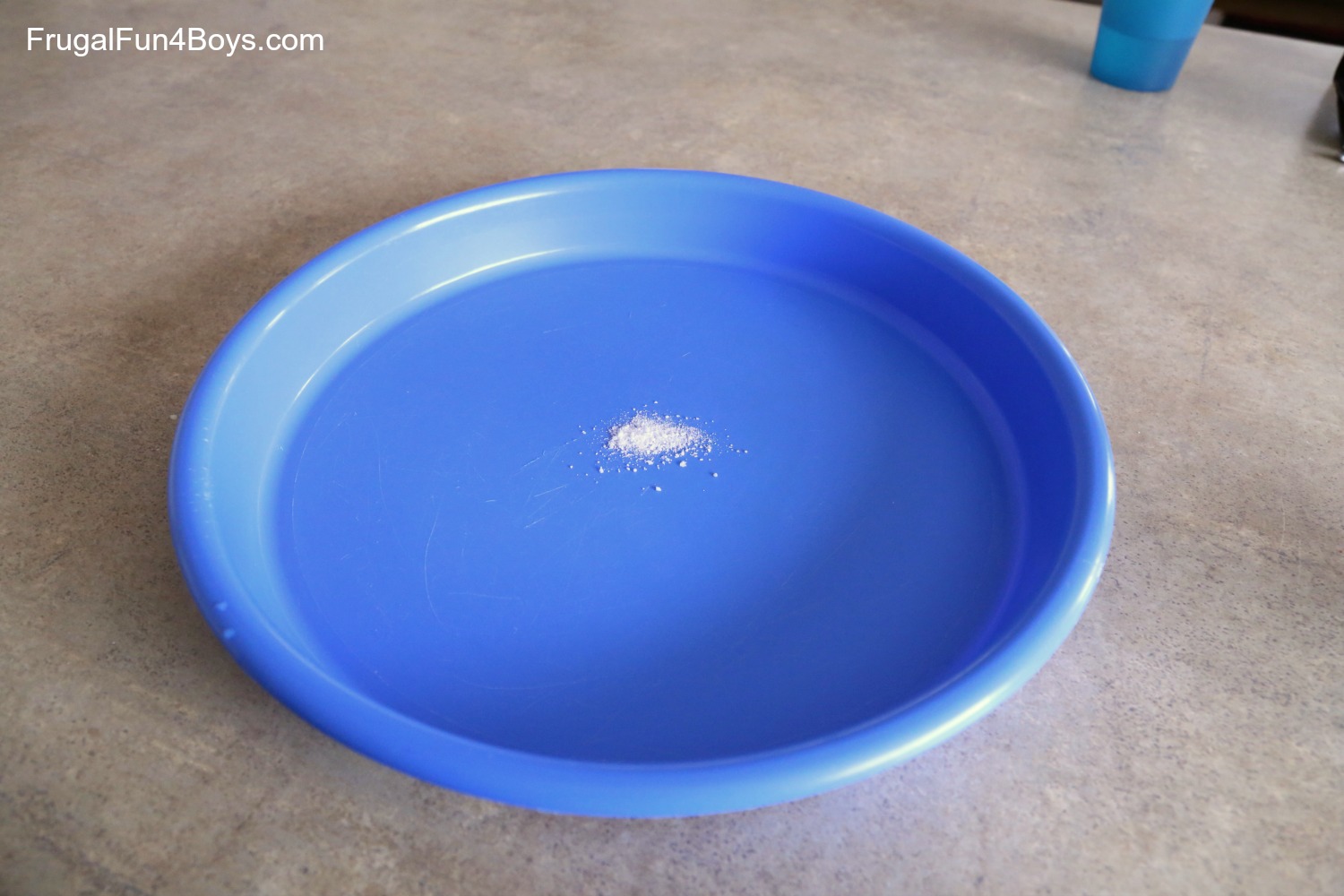
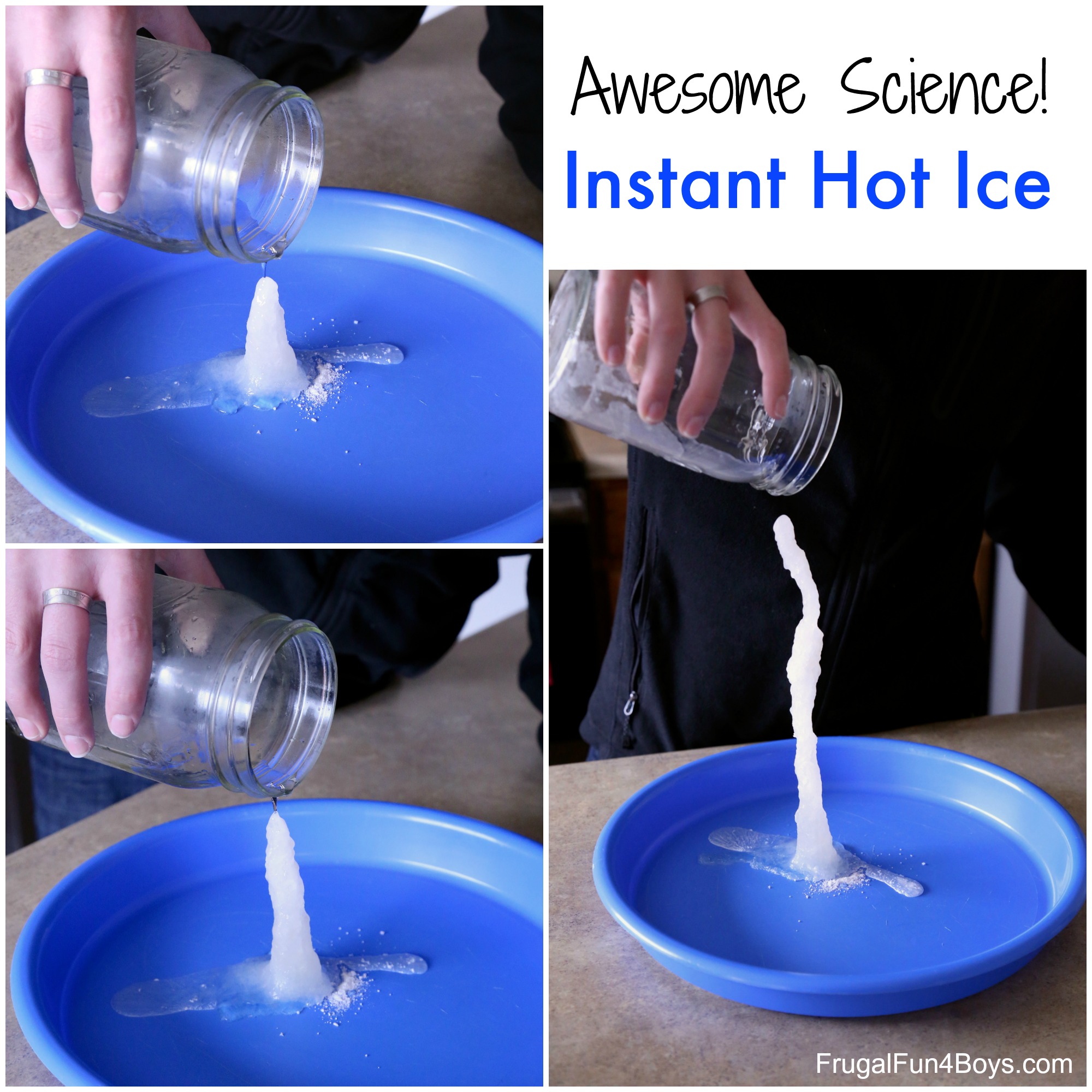
And so Aidan poured the solution very slowly onto the crystals.
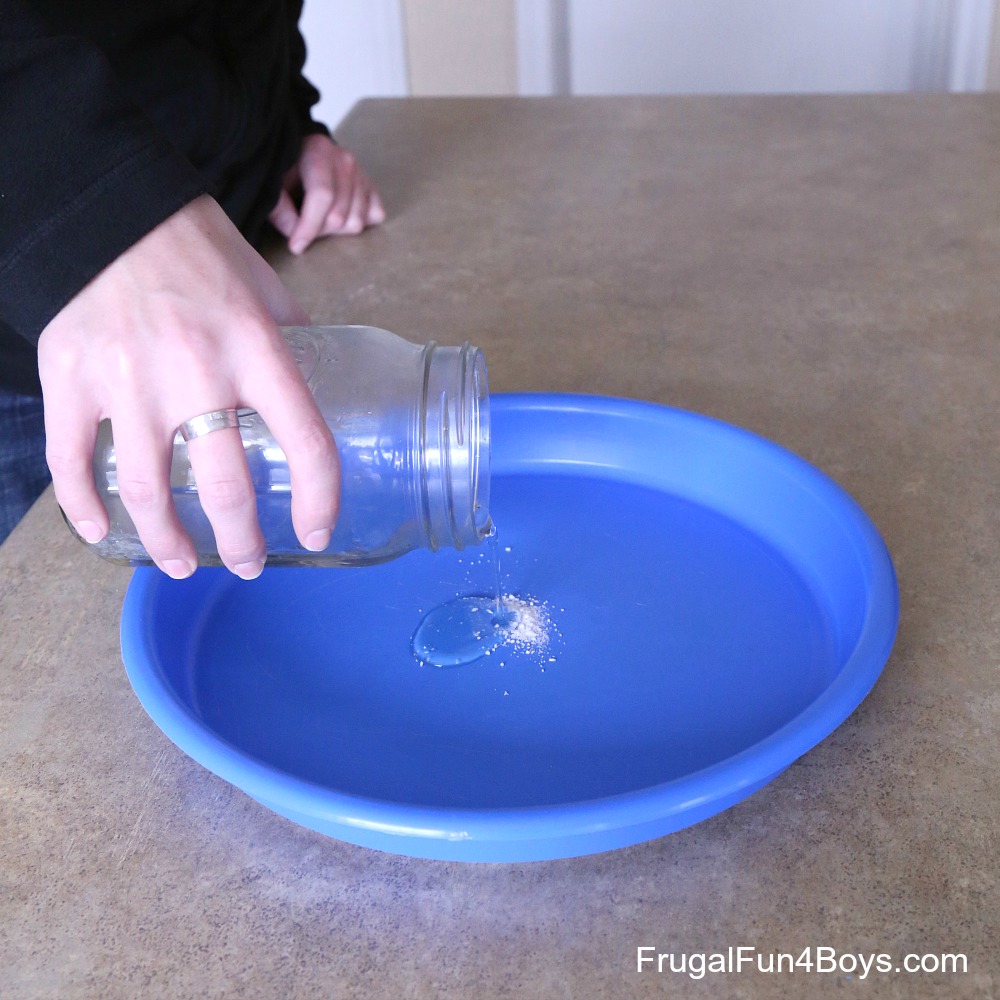
The first little bit took a few seconds to crystallize… but it DID!
He kept pouring, a piffling at a time…
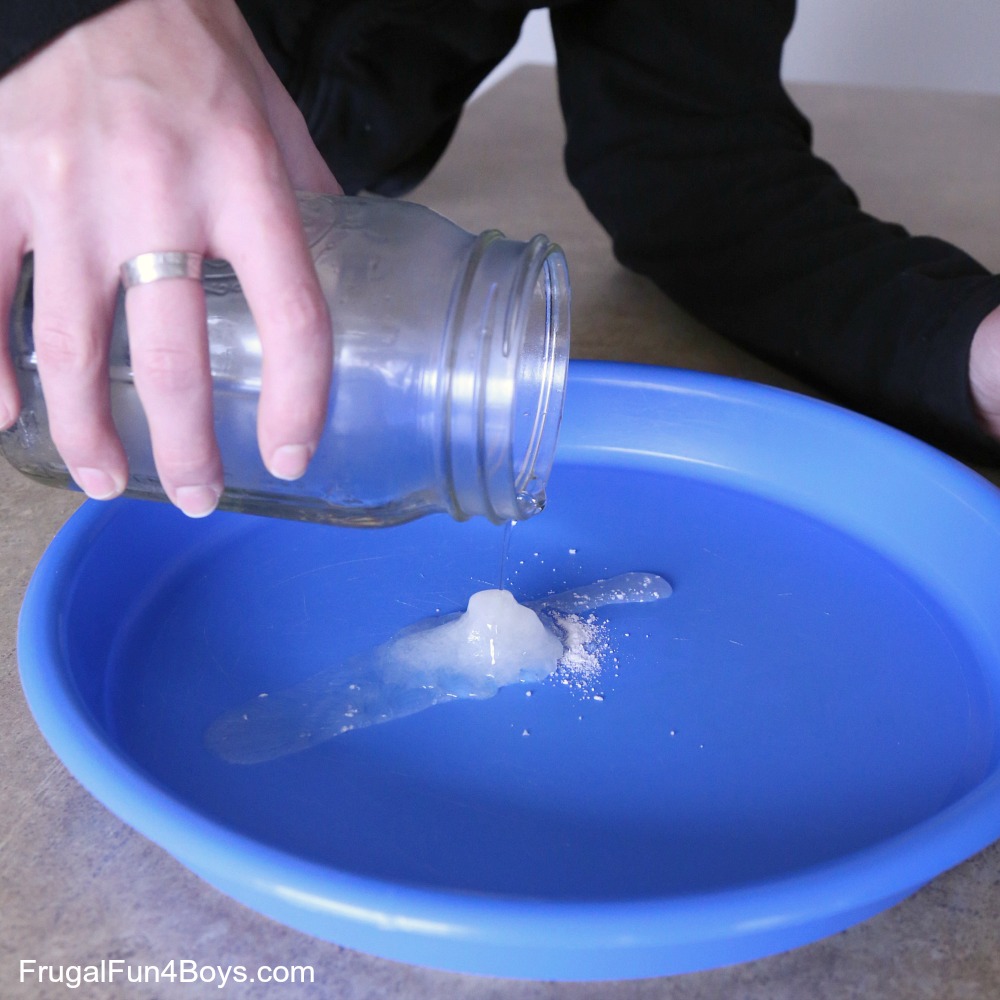
If you lot cascade likewise quickly, the crystals volition spread out horizontally. So nosotros went nice and boring.
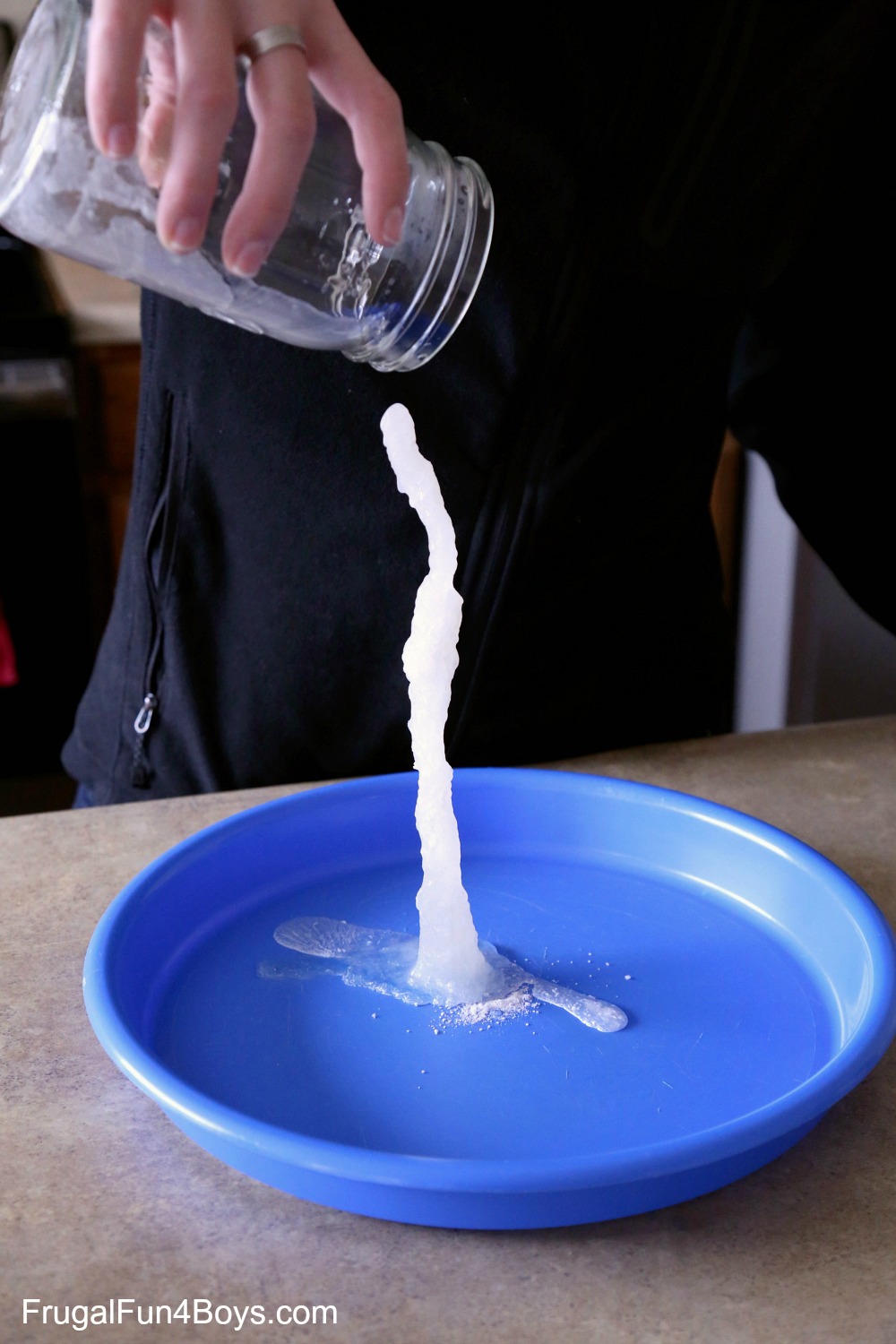
It was and then fun to sentry! By the end, Aidan was pouring merely a drop at a time, and we could really watch each driblet piling up on superlative of the tower of hot ice.
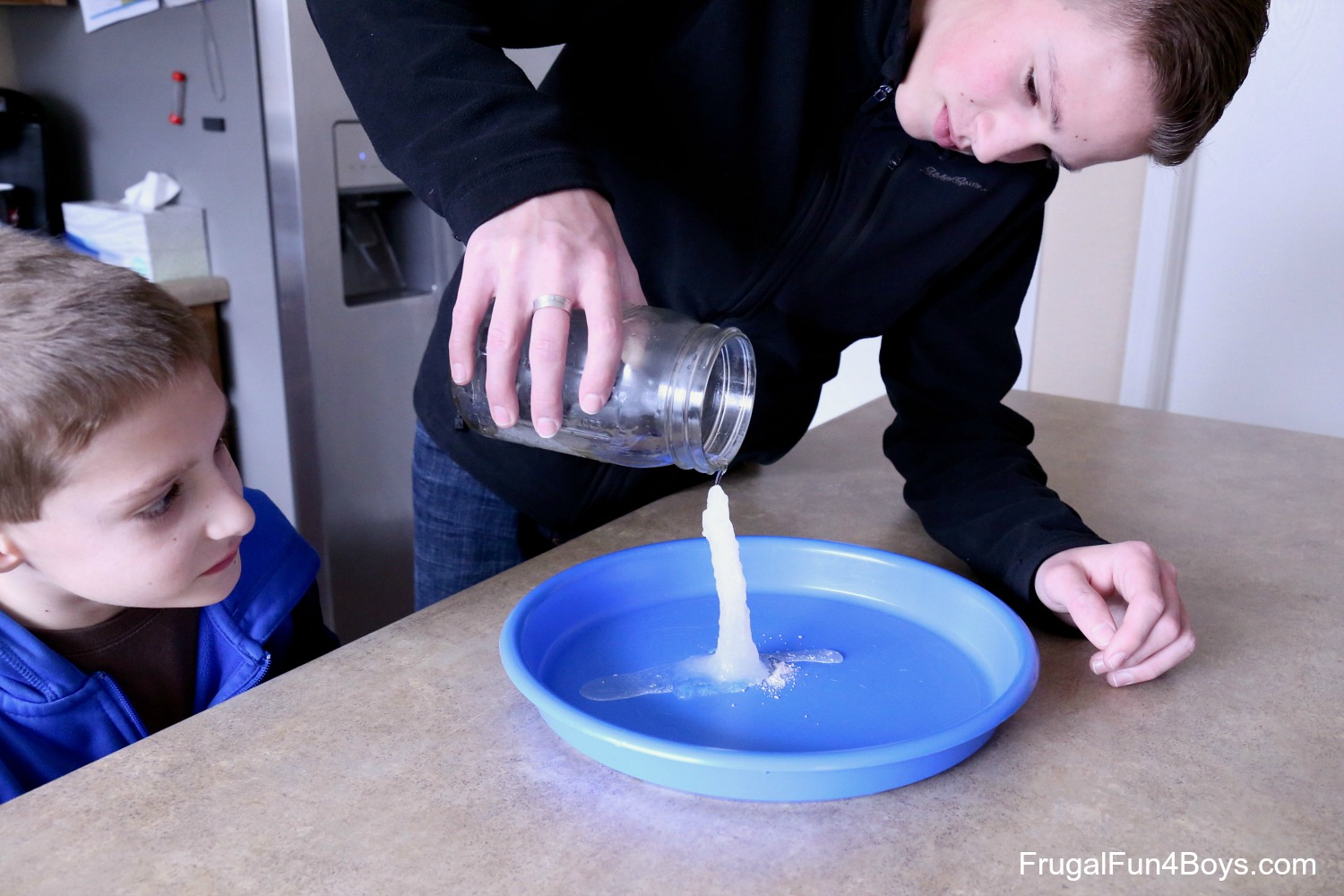
We didn't get a run a risk to measure out our terminal tower, but information technology was impressive!
Why does this work?
The sodium acetate solution contains water. We reduced the corporeality of water in the solution by boiling information technology, but there is still h2o in there. The water molecules go along the sodium acetate from forming crystals. Well, crystals may get-go to form, only as a few molecules bring together together, the h2o molecules pull them apart over again.
When we cooled the solution, we were able to bring the sodium acetate down to a temperature lower than the point at which information technology would normally become a solid. This word for this is supercooled.
By the way, we think of melting and freezing points mainly in reference to h2o, merely all substances have a melting/freezing betoken. For example, copper remains a solid until it reaches 1,984 degrees Fahrenheit!
Back to the sodium acetate… The crystals in the tray provided a starting point for crystals to grow in the solution, chosen a nucleation site. This gave the sodium acetate the push it needed to crystallize!
The directions on Instructables said to filter the solution to go rid of whatsoever impurities that might inhibit the crystallization process. We didn't practice that step, and information technology turned out fine.
The crystallization procedure gives off rut, so the hot water ice is hot to the touch! Not hot enough to burn, though. Nosotros all had fun touching information technology!
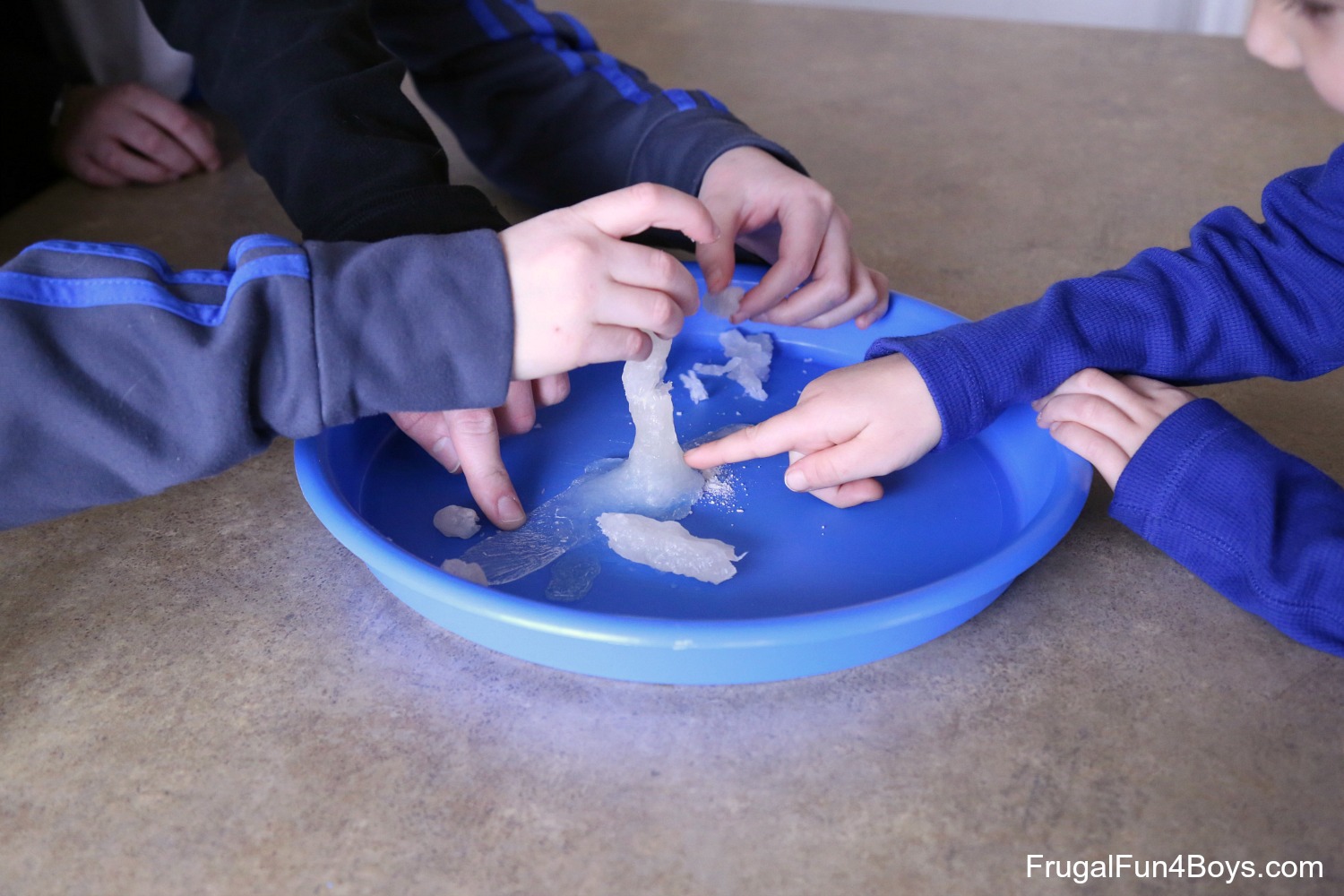
Our belfry was pretty flimsy and bankrupt speedily, simply nosotros had a groovy time with this science experiment. If you lot want to repeat the process, you can melt the crystals down into a liquid again, cool it once more, and make another tower!
Likewise, I was a little worried about our pot, just it was super easy to clean. The sodium acetate dissolves easily and rinses right off.
Accept fun with scientific discipline!
Source: https://frugalfun4boys.com/hot-ice-science-experiment/
0 Response to "Hot Ice â€å½ã¢â‚¬â€œ It Won t Happen Again"
Post a Comment